
Puff Screen Print Transfers Aren’t a Trend.
This article is part of our Print with Personality series, where we explore how specialty screen print transfers influence perception, positioning, and pricing in the decorated apparel industry.
Most decorators think of Puff screen print transfers as a trend.
In reality, they’re something far more useful: a pricing tool.
Puff isn’t about decoration for decoration’s sake. It’s about adding dimension, creating tactile interest, and giving otherwise simple designs the kind of presence that allows decorators to charge differently.
That’s not accidental.
The Psychology of Dimension
Flat ink sits on a garment. Puff ink rises off of it.
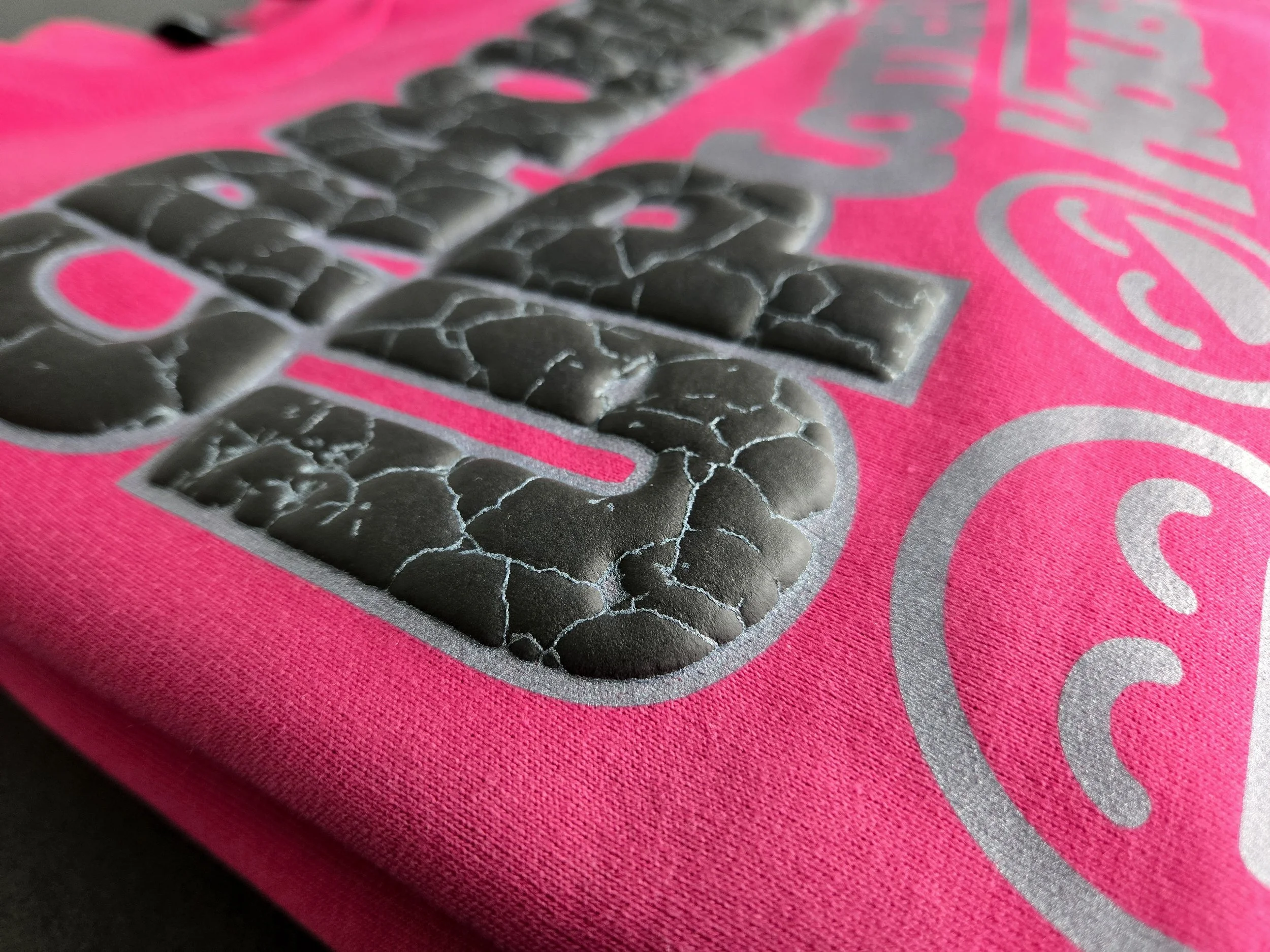
That subtle lift changes how light interacts with the design. It creates texture. It introduces shadow. It makes the print feel intentional and considered.
Customers may not use the phrase “dimensional screen print transfers,” but they do recognize when something feels different. They instinctively touch it. They notice the depth. And that physical interaction increases perceived value.
Dimension communicates craftsmanship without saying a word.
And in retail environments, perceived value is everything.
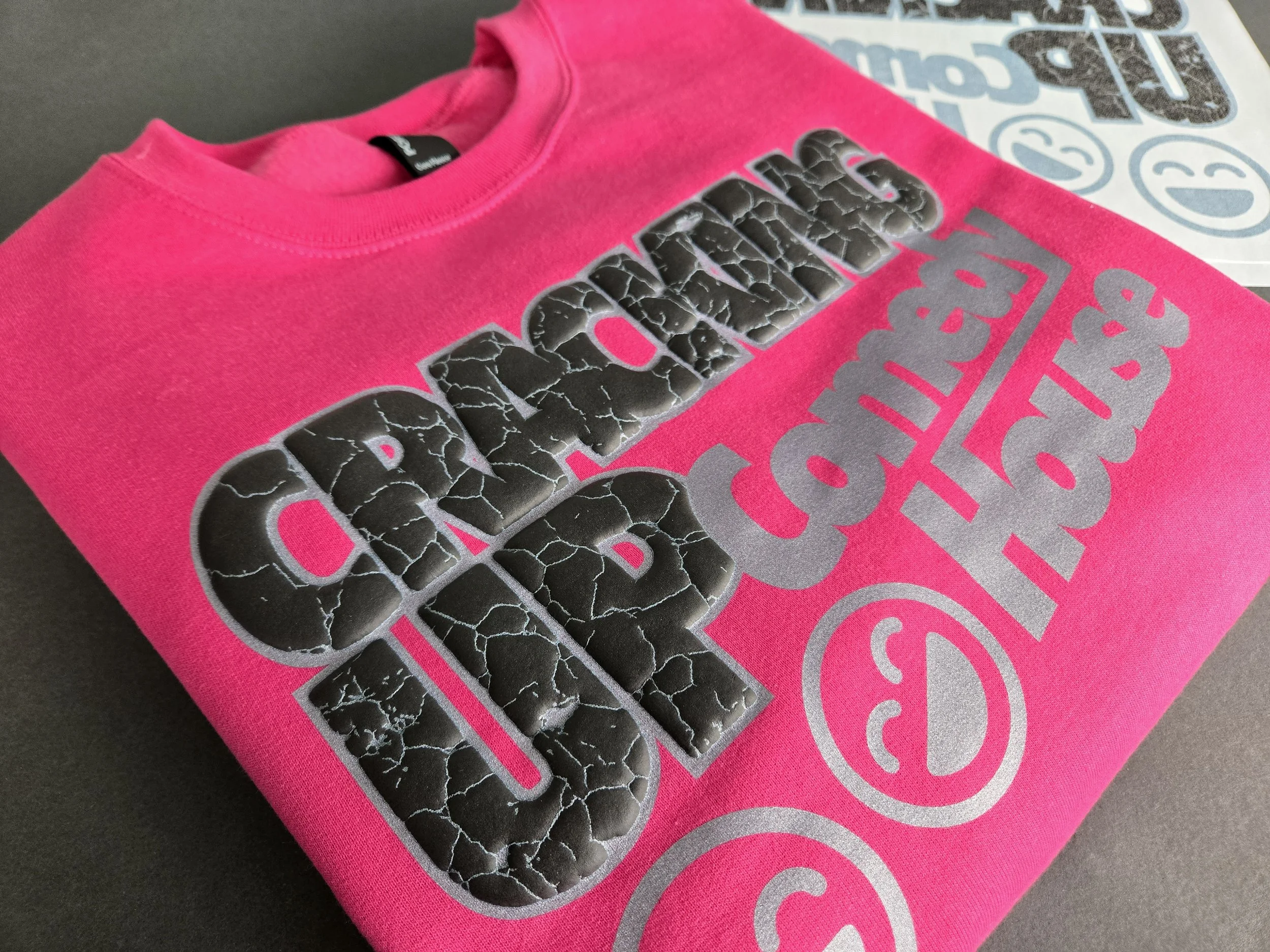
Puff and Shimmer printed on the Port & Company PC78 Core Fleece Crewneck Sweatshirt in Sangria.
Real World Puff Applications
One of our favorite examples of dimensional design combines Black Puff ink with Frost Shimmer Howard Multi-Purpose ink in a two-color transfer created for hospitality merch.
The concept is simple.
Black Puff creates the structure.
Frost Shimmer creates the highlight.
The main typography uses Black Puff with a cracked effect built into the artwork. Instead of a smooth raised surface, the cracked pattern adds visual texture that reinforces the slightly gritty, late-night personality of a comedy club brand.
The Puff gives the headline its presence.
The cracked pattern gives it character.
Supporting elements — the subtext and icons — are printed using frost shimmer in flat plastisol. This finish catches light without competing with the dimensional ink.
The result is a design that feels layered and intentional:
The Puff establishes hierarchy
The Shimmer adds contrast and brightness
The artwork stays simple enough to remain bold and readable
Even though the design uses only two colors, the combination of dimension and specialty finish makes the garment feel significantly more premium than a standard flat print.
That’s the real advantage of specialty transfers.
Decorators often assume that creating premium merch requires more colors or more complicated artwork. In reality, finishes like Puff and Shimmer allow you to elevate simple designs without increasing production complexity.
In markets like hospitality, entertainment venues, breweries, and comedy clubs, that difference matters. These businesses aren’t just selling shirts — they’re selling souvenirs tied to an experience.
A dimensional, tactile print reinforces that experience in a way flat ink rarely can.
And when customers pick up a shirt that feels different, pricing tends to become a much easier conversation.
Are Puff Screen Print Transfers Worth It?
Decorators often ask whether Puff heat transfers justify the added cost.
The better question is whether flat ink is limiting your pricing power.
A crewneck printed with standard plastisol competes in a crowded space. Introduce dimension intentionally and that same sweatshirt moves into a different tier. The perceived value increases before anyone looks at the price tag.
Puff plastisol transfers don’t automatically make a design better.
But when paired with strong artwork and clear hierarchy, they give decorators permission to price differently because the product looks different.
That’s not trend-based thinking. That’s margin strategy.
Where Puff Performs Best
Puff screen print transfers perform exceptionally well in:
Boutique retail
Premium spirit wear
Streetwear-inspired drops
Lifestyle brands
Limited-run merch
Puff screen print transfers perform best in markets where differentiation matters.
In boutique retail, dimension creates a tactile experience that mirrors what customers expect from premium brands. When shoppers run their hand across a raised graphic, it reinforces the idea that the garment is thoughtfully produced, not mass printed.
In spirit wear and lifestyle apparel, Puff works especially well for bold typography and clean icons. It gives otherwise simple designs a signature feel. Instead of adding more colors or more detail, decorators can add depth.
Streetwear-inspired drops benefit from Puff because dimension aligns with contemporary design language. Clean layouts. Strong type. Elevated finishes. Puff enhances that aesthetic without complicating it.
Limited-run merch and special releases are another strong fit. When scarcity meets specialty finish, the perceived value increases even further. The garment feels intentional — not generic.
The key is restraint.
Puff works best when it has room to breathe. Bold strokes. Clear shapes. Purposeful placement.
Used strategically, it becomes a brand signature. Used excessively, it becomes novelty.
When Puff Doesn’t Make Sense
Puff is not ideal for:
Ultra-fine linework
Halftone artwork
Overly distressed artwork
Budget-first promotional pieces
Because Puff ink expands during application, extremely small details can distort. That doesn’t mean Puff is limiting, it simply means it must be designed for intentionally.
Specialty finishes amplify strong artwork.
They don’t rescue weak design.
Designing for Puff
If you’re using Puff plastisol transfers, design intentionally:
Thicker strokes
Simplified forms
Clear separation between dimensional and flat elements
Intentional visual hierarchy
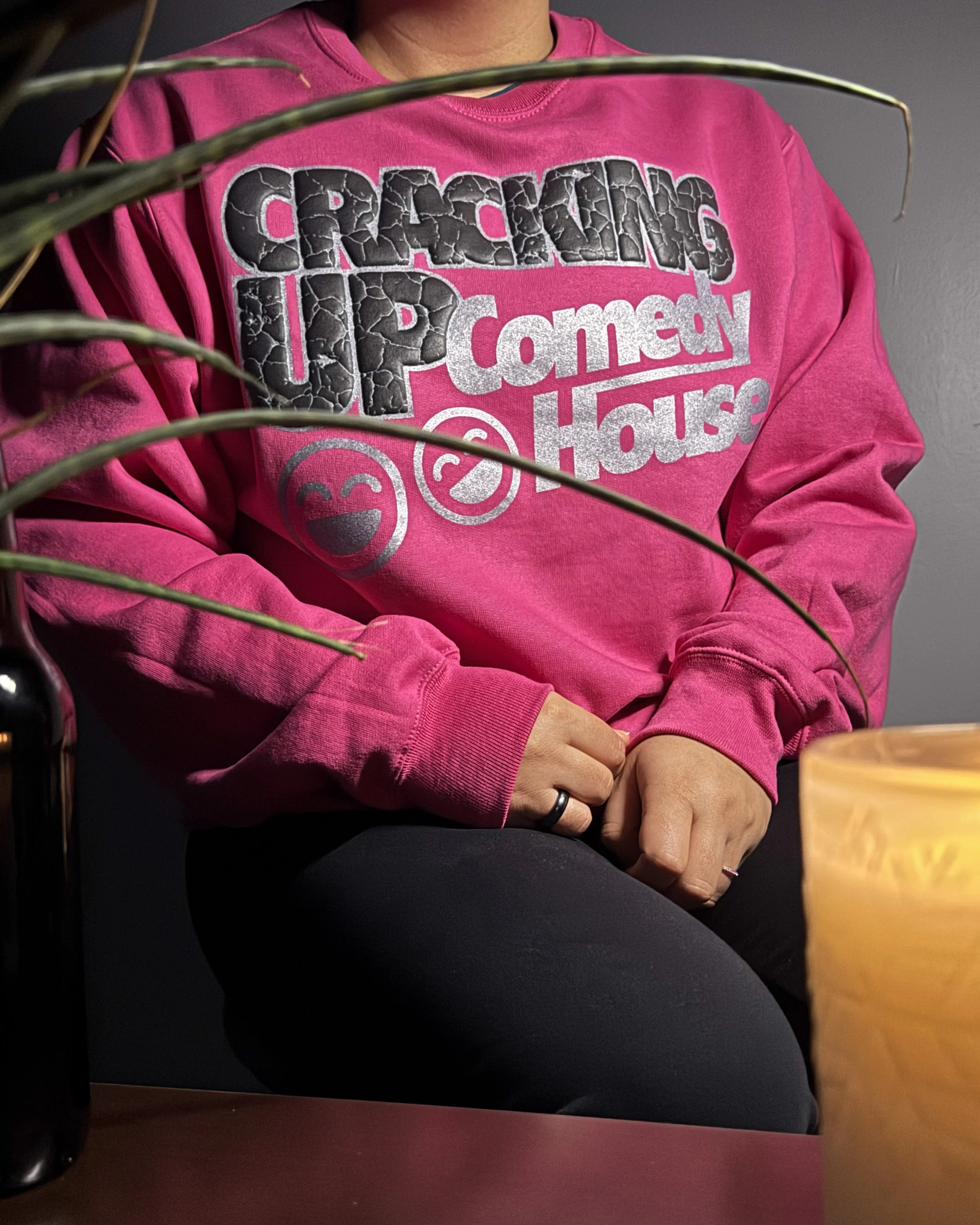
In our Cracked Up Comedy Club example, the Puff isn’t random. It highlights the most important element of the design. The flat Shimmer ink supports it.
That balance is what makes the result feel elevated instead of overworked.
We’ll go deeper into specialty artwork adjustments later in this series because designing for Puff is just as important as choosing it.
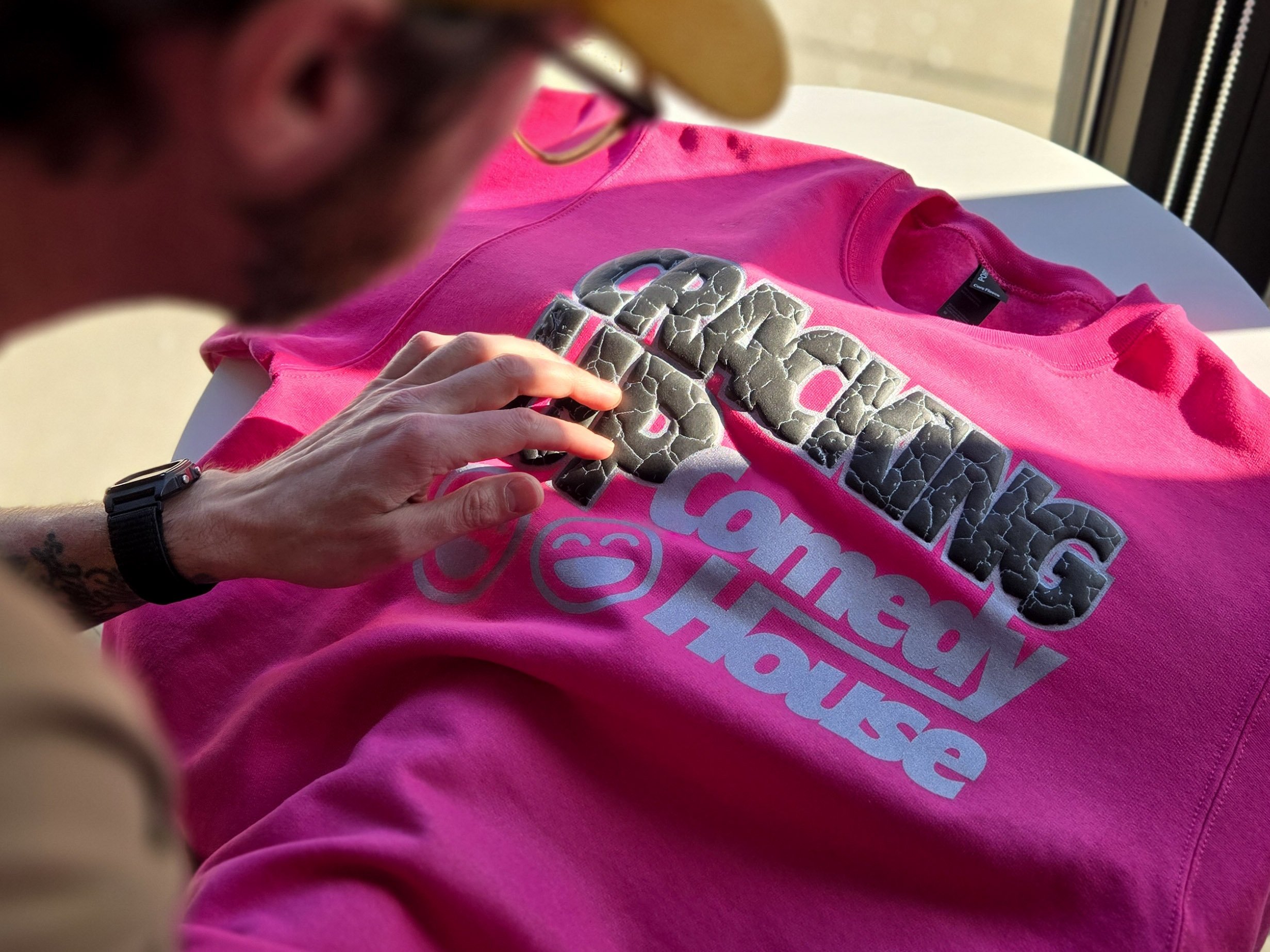
Puff and Shimmer printed on the Port & Company PC78 Core Fleece Crewneck Sweatshirt in Sangria by Sanmar.
The Strategic Takeaway
When someone walks into our showroom, those Puff pieces stop them. Not because they’re loud, but because they feel different.
In a market saturated with flat prints and race-to-the-bottom pricing, different protects margin.
If you’re competing on price, Puff feels optional. If you’re competing on brand, Puff becomes strategic.
Puff screen print transfers aren’t a trend. They’re a positioning decision.
Frequently Asked Questions About Puff Screen Print Transfers
What are Puff screen print transfers?
Puff screen print transfers use a specialty plastisol ink that expands when heat applied, creating a raised, three-dimensional effect on garments.
How do Puff heat transfers create a 3D effect?
Puff plastisol ink reacts to heat during application, causing the ink to expand and create a dimensional, raised surface.
Are Puff screen print transfers durable?
Yes. When applied with proper temperature, pressure, and dwell time, Puff plastisol transfers maintain their structure and durability through repeated washing.
Can Puff ink be combined with standard plastisol ink?
Absolutely. Puff ink is frequently paired with traditional flat plastisol ink to create contrast, hierarchy, and multi-dimensional designs.
Are Puff transfers good for hoodies?
Yes. Puff screen print transfers perform especially well on hoodies and heavyweight garments where the dimensional effect enhances perceived quality.
When should you avoid Puff screen printing?
Avoid Puff for ultra-fine detail, complex halftones, or heavily distressed artwork where expansion may distort small design elements.
Up Next in the Series
In our next article, we explore how Shimmer and Glitter screen print transfers convert in high-energy markets like cheer, dance, and boutique retail.