
Camo is a pattern, not a personality.
A football team, winery, streetwear label, and hunting club can all use it without looking like four versions of the same brand. A team needs a shirt fans recognize from the bleachers. A winery needs a souvenir worth wearing after the tasting. A streetwear label can make the pattern feel darker, quieter, and more deliberate. The market changes the job.
The right camo merch strategy starts with the buyer, not the pattern. Decide who should want the piece, why they would wear it, and where it will be sold. Then choose the garment, artwork, transfer direction, photography, and offer around that answer. Camo can add the surprise. It shouldn’t be asked to supply the whole identity.
Who Is Supposed to Want It
“Customer wants camo” is the start of a brief, not the brief itself. Find out who’ll wear the finished piece, where they’ll wear it, and why they would choose it over the other shirts available to them.
A school fundraiser, for example, has to be legible as school merch before it has to be clever about camouflage. A streetwear drop can leave more to discovery up close. A destination shop needs a keepsake that still earns closet space when the customer gets home.
Ask the customer these questions before presenting a blank or transfer:
| Brief question | Decision it helps make |
|---|---|
| Who will wear or buy this? | The identity and level of familiarity the design needs |
| Where will it be sold or handed out? | Whether it should work as a retail piece, team shirt, event item, or uniform |
| What should someone notice first? | The message and artwork hierarchy |
| What else is in the merchandise lineup? | Whether camo is the hero, a premium option, or one piece in a wider collection |
| Where will people first see it? | The photography, product presentation, and amount of detail that must read at a glance |
Those answers prevent a common mistake: choosing a camo blank and letting its outdoorsy reputation make every subsequent decision.
What Role Should Camo Play in the Offer
One camo piece can be a distinctive addition to a familiar assortment. It doesn’t have to turn the whole program into a camouflage collection. Think of the item as a reason to buy, not simply another color option on an order form.
For a football team, a camo tee could sit beside core school-color pieces as a limited variation. A streetwear label could make a tonal hoodie the close-up piece in a small drop. A destination retailer might choose a camo crewneck as the sweatshirt someone picks up for the artwork and keeps for the feel.
Decide what the camo item adds that the other garments don’t. Is it a stronger visual for a drop? A different fabric for a particular wearer? A premium option with more character? If you can explain its role in one sentence, it becomes easier to choose the right blank and artwork. If you can’t, the pattern may be doing too much of the selling.
This is also where quantity, timing, and price belong in the conversation. For a team shop, an everyday school-color tee and a limited camo version have different jobs. Show the camo shirt as a featured piece with its own photos and launch moment, then decide how many to offer. Define the offer before you spend time refining a finish that doesn’t fit how the piece will be sold.
Does the Artwork Still Look Like the Customer
Camouflage has strong associations, but the artwork doesn’t have to repeat them. Put the brand cues that make the customer recognizable on the garment.
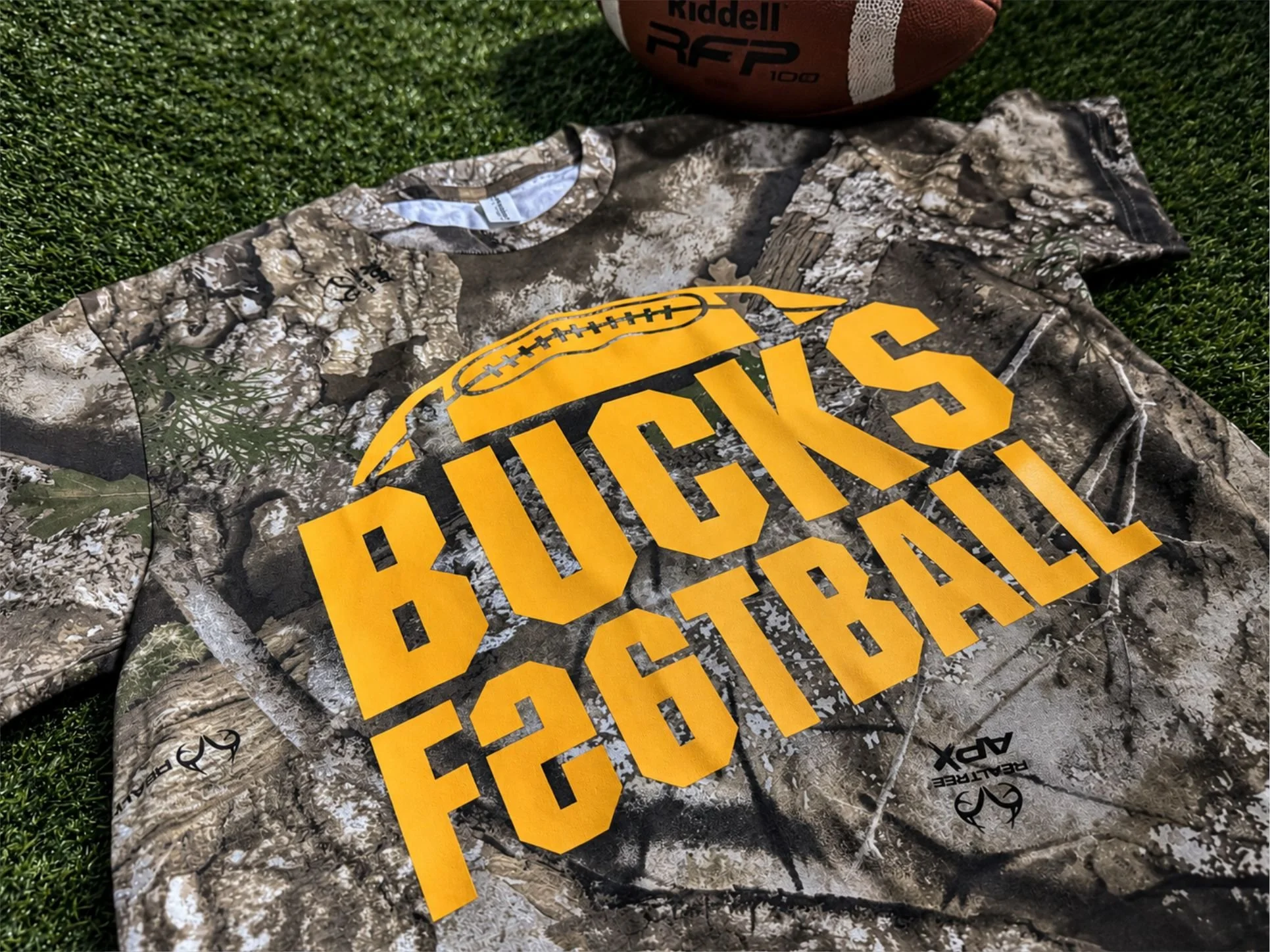
The Bucks Football design in HCT’s Camo Collection uses large athletic type, a football, and Athletic Gold on Realtree APX. It reads as spirit wear because the team identity leads. The argument for the camo blank is that it gives familiar school merch a fresh surface. Adding antlers to signal “camo” would pull the shirt toward an entirely different market.
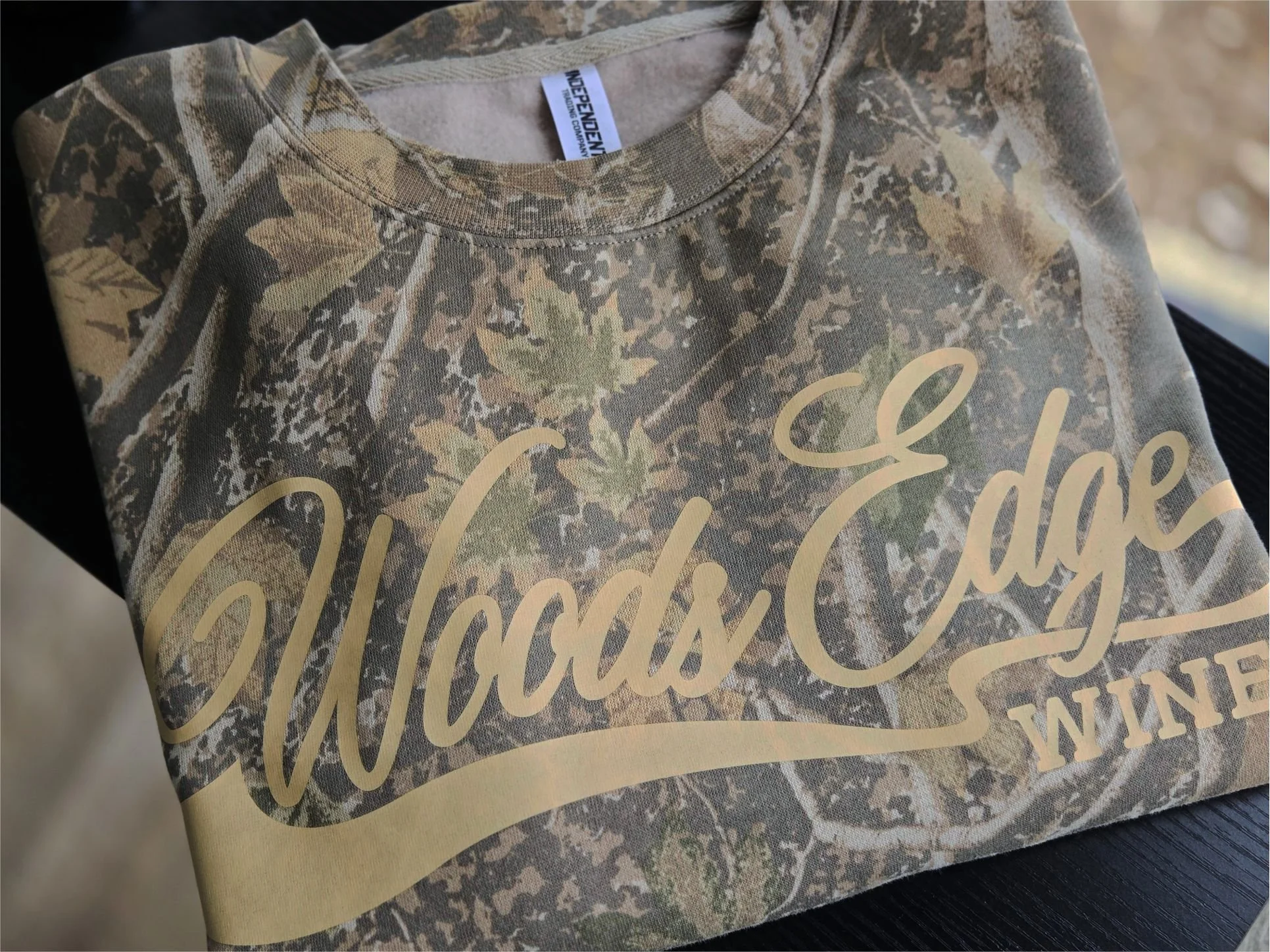
After Dark Co. makes another point. Its black graffiti-inspired mark gains dimension from Black Puff on a black camo hoodie, creating a tonal streetwear piece. Woods Edge Winery uses sweeping script on a camo crewneck to give destination merchandise its own softer feel. These customers aren’t borrowing the same outdoor costume simply because their blanks share a pattern category.
Give the customer a question they can answer without knowing transfer products: “If we put this artwork on a solid shirt, would it still look like your brand?” If the answer is no, revisit the concept. A distinctive garment can strengthen an identity, but it shouldn’t be asked to invent one.
How Should Camo Merch Be Photographed
Photograph camo merch for the customer it was made for, not the pattern it happens to be printed on. The market, artwork, and purpose of the piece should determine the setting, styling, and details you capture.
A football shirt should feel athletic. A winery crewneck should feel like destination merchandise. A tonal hoodie might call for darker lighting and tight crops that emphasize its streetwear attitude. These shirts can all use camo without belonging in the same photo shoot.
Choose visual cues that reinforce the finished concept. Show the full garment clearly, then capture the detail that helps sell its value, whether that’s the raised surface of Puff, the pattern showing through Vintage Wash, or bold lettering holding its own against a busy background.
The Bucks shirt disappearing into leaves would make the camo the story. Photographing it with strong team, athletic, or retail cues keeps the focus where it belongs: on a football shirt that happens to use camo in a more unexpected way.
Should You Sell the Transfer or the Outcome
Decorators need to know the transfer and how it works. Their customers usually start somewhere else: “Will our team wear this?” “Does it look like our brand?” “Can we sell it in our shop?”
Lead a presentation with the finished garment and the reason it fits that customer. Then explain how the print choice helps deliver the result. HCT’s five-way camo printing guide shows how contrast, hierarchy, texture, transparency, and sample comparisons answer different project goals.
Howard Custom Transfers can help with the press-ready print once the direction is set. The first step is understanding the merchandise people are meant to buy, wear, and remember.
A Quick Test Before You Pitch Camo
Write a one-sentence description of the piece without using the word camo. “A football shirt with an unmistakable team mark.” “A winery crewneck with a vintage souvenir feel.” “A tonal hoodie with a raised graphic worth seeing up close.”
Now add the camouflage garment back in. Does it make that idea better? If it does, you have a project direction. If it changes the story into something the customer didn’t ask for, reconsider the blank, artwork, or presentation.
The pattern brings character. The customer gives it a purpose.
Frequently Asked Questions
Can camo work for a brand that isn’t outdoors-focused?
Yes, if the garment supports that brand’s identity and the artwork makes the customer recognizable. A football team, streetwear label, or destination retailer can each use camo differently. Start with the audience rather than assuming the pattern defines the market.
Should every piece in a merchandise program use camo?
Usually there’s more value in deciding what one camo piece contributes to the assortment. It might be a special colorway, a premium option, or a specific drop. The right number depends on the customer’s audience, offer, and sales plan.
How should you photograph camo merch?
Make the garment and artwork easy to see, then choose styling that reflects the customer’s market. Use a clear overall view and a relevant detail. A setting that makes the shirt disappear or suggests the wrong audience can undercut a strong design.
Open the full Camo Collection report to see how four different markets led to four distinct merch concepts, then use those examples to make your next customer conversation more visual, specific, and inspired.