
How to Curate Apparel Samples That Actually Lead to Revenue
TLDR
Curating showroom samples isn’t about showing more skill, it’s about showing more intention. The most effective apparel showrooms guide customers through clear sales moments using fewer, better-selected samples. By aligning physical displays with a good, better, best pricing structure and focusing on outcomes instead of emotional attachment, decorators can turn sample walls into active sales tools that support confidence, clarity, and higher-value orders.
Most apparel decorators don’t struggle with making great prints. They struggle with showing them in a way that leads to confident buying decisions.
Sample walls often start with good intentions. You want to show range. Skill. Creativity. Proof that you know what you’re doing. Over time, that turns into walls packed with prints you’re proud of but not necessarily prints that sell.
If your showroom feels busy, overwhelming, or hard to explain, it’s probably doing too much work and not enough selling.
This article is about shifting that mindset. Because samples aren’t just proof of capability. They’re sales tools. And the way you curate them determines how conversations and orders move forward.
Why More Samples Often Mean Less Sales
When customers walk into a showroom filled with disconnected examples, they’re forced to figure things out on their own. They scan, compare, and try to decide what matters without guidance.
That friction slows decisions. And when customers feel uncertain, they default to the simplest comparison available: price.
The problem isn’t that you’re showing too much good work. It’s that everything is competing for attention.
When everything is highlighted, nothing stands out.
A curated showroom removes noise. It gives customers a clear starting point, a logical progression, and visual cues that say: this is what matters. That clarity is what allows value to lead the conversation, not price.
The Showroom Formula Starts with Intentional Curation
In a sales conversation, you wouldn’t start by listing every option you offer. You’d ask questions, listen, and guide.
Your showroom should work the same way.
That’s the foundation of what we call The Showroom Formula: fewer samples, clearer hierarchy, intentional flow.
Every sample should earn its place. If it doesn’t help a customer decide faster, understand value more clearly, or visualize an upgrade, it’s not doing its job.
This doesn’t mean limiting your capabilities. It means leading with purpose instead of volume.
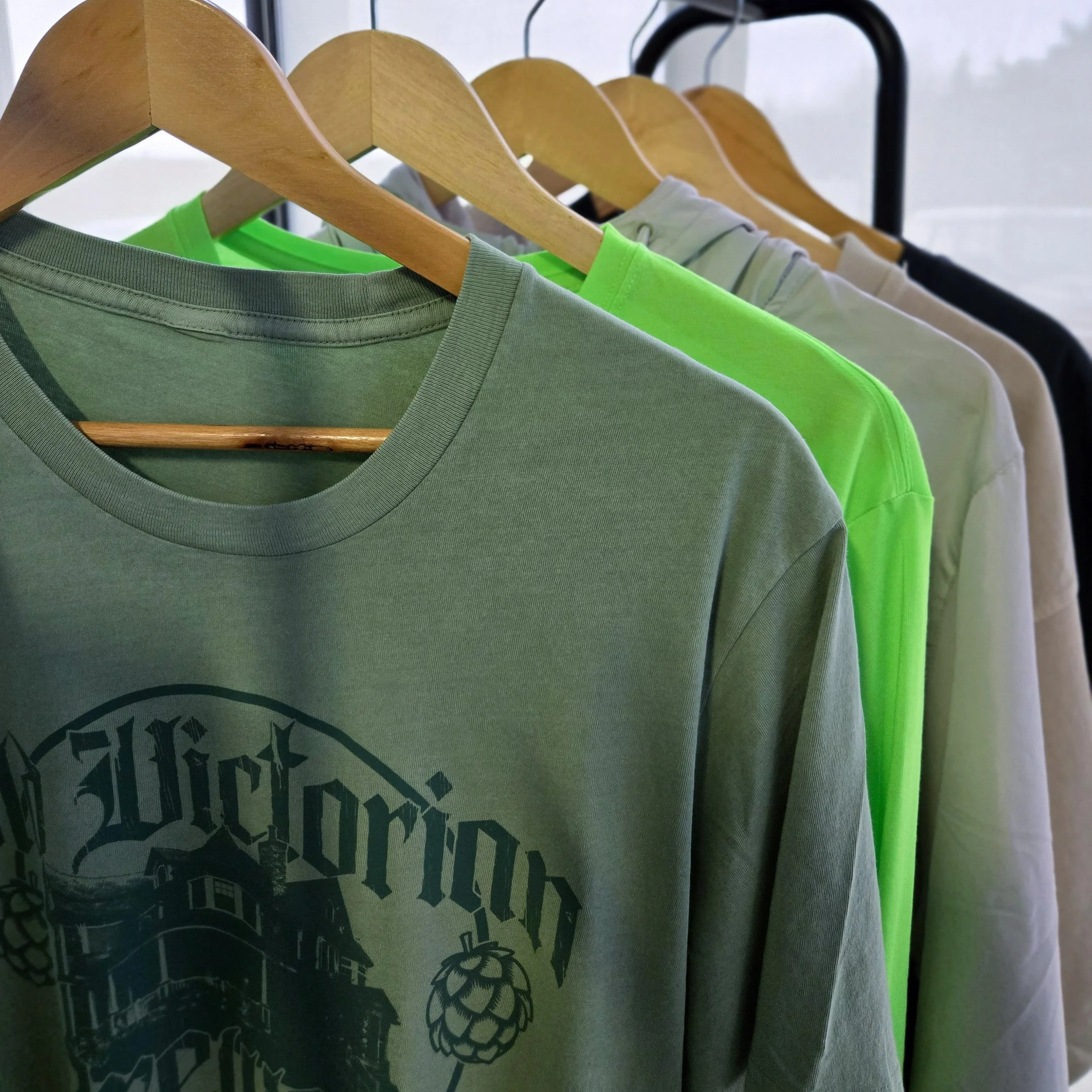

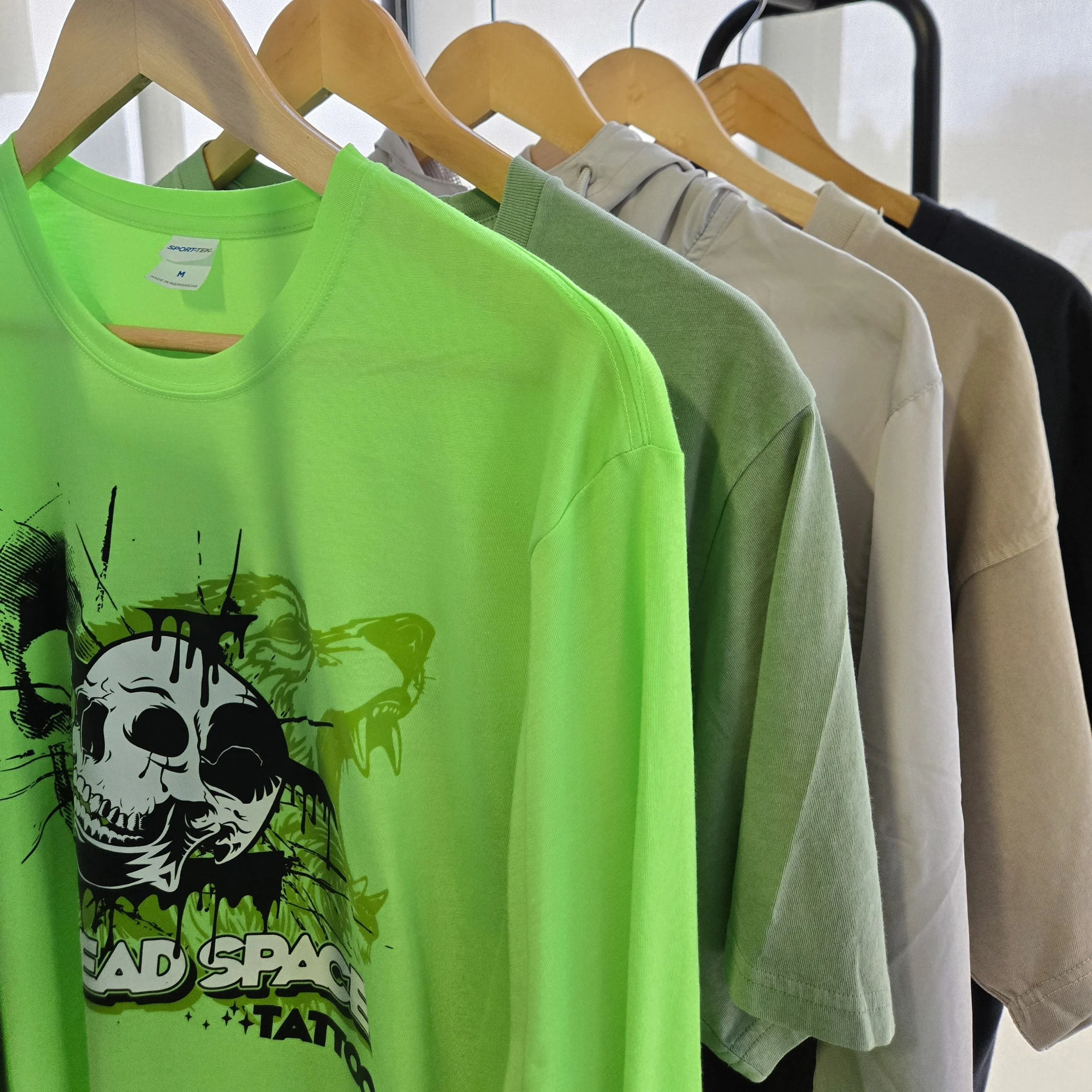
Choosing Samples Based on Sales Moments (Not Print Pride)
Let’s be honest, this is the hard part.
Decorators form emotional attachments to their prints. That project you obsessed over. The design that finally came out perfect. The specialty finish you dialed in after multiple attempts.
We’ve all been there.
There’s nothing wrong with taking pride in your work. But pride pieces and sales pieces are not always the same thing.
A showroom isn’t a personal portfolio. It’s a decision-making environment.
Instead of asking, “What am I proud of?” ask:
What does a first-time buyer need to see?
What helps a price-sensitive customer understand upgrades?
What supports a premium recommendation?
What makes the difference between a safe order and a better one obvious?
Samples should represent sales moments, not just technical wins.
This is especially important for decorators using screen printed and DTF heat transfers. Without context, transfers can look interchangeable. With intention, they demonstrate consistency, flexibility, durability, and efficiency. These are advantages customers may not understand unless you show them clearly.
Turning Pricing Menus into Physical Proof
In February, we talked about pricing menus built around a good, better, best structure. That framework doesn’t belong only on paper. It belongs on your wall.
Your showroom is where pricing strategy becomes tangible.
A strong sample lineup visually supports:
Good – a reliable, everyday solution
Better – an elevated option with added value
Best – a premium finish that creates impact and differentiation
When customers can see and feel the difference between these options, the menu stops being theoretical. It becomes intuitive.
Instead of explaining why one option costs more, the samples do the work for you.
This is where curated samples stop feeling like decoration and start functioning like sales support.

Use the Same Design to Tell Different Stories
One of the most effective ways to demonstrate value is repetition with intention.
Use the same logo or artwork across:
Multiple garments
Different transfer types
Standard and specialty finishes
This removes variables and sharpens comparison.
Customers aren’t distracted by design changes. They’re focused on outcome. They can see how a base option compares to a specialty finish. They can understand why one feels premium. They can visualize how upgrades apply to their brand.
Heat transfers make this approach especially powerful. The same artwork can be applied consistently across different use cases without rebuilding setups, making it easier to show flexibility and scalability.
What to Remove from Your Sample Wall First
If editing feels overwhelming, start here.
Consider removing:
Redundant designs that don’t add contrast
Outdated garment styles that don’t reflect current buying behavior
Novelty prints that require too much explanation
Samples that don’t support a clear sales outcome
Pieces you love but can’t confidently sell
Editing isn’t about loss. It’s about focus.
A tighter wall makes every remaining sample stronger.
How Curated Samples Change Price Conversation
When customers understand what they’re seeing, price stops being the primary filter.
Curated samples:
Build confidence
Reduce uncertainty
Support recommendations
Make upgrades feel logical, not pushy
When value is visible, price becomes contextual instead of confrontational.
That’s the real power of curation. It doesn’t just make your showroom look better. It makes selling easier.
Common Questions About Curating Showroom Samples
Does this mean I shouldn’t show my best work?
Not at all. It means your best work should support a buying decision. Portfolio pieces still matter but sales samples should be chosen for clarity and relevance first.
How many samples should a showroom have?
There’s no universal number. The right amount is whatever allows customers to understand options without feeling overwhelmed. Fewer samples with clear contrast almost always outperform crowded displays.
How does this connect to pricing strategy?
Samples visually reinforce your pricing structure. When customers can see the difference between good, better, and best options, pricing feels justified instead of arbitrary.
How often should showroom samples be updated?
The structure can stay consistent. Samples should be refreshed seasonally or as new finishes and trends emerge. Small updates keep the space relevant without rebuilding from scratch.
Up Next
Next, we’ll break down how to structure those curated samples using the Rule of 3: base, specialty, and WOW—so every display naturally leads to an upgrade conversation.