
How to Upsell Specialty Finishes Without Sounding Salesy
For apparel decorators who rely on custom screen print or DTF transfers, upselling can feel uncomfortable. You’re often guiding customers through design and pricing decisions long before anything ever hits a heat press. No one wants that guidance to feel pushy.
Here’s the reality: when it comes to specialty finishes, the problem usually isn’t selling.
It’s positioning.
Specialty finishes aren’t “extras.” They’re design tools. And when they’re presented as professional recommendations — not optional add-ons — they don’t feel salesy at all. They feel helpful.
This article breaks down how decorators using custom transfers can introduce specialty finishes naturally, increase average order value, and improve margins without increasing application complexity at the press.
Specialty Finishes Aren’t Add-Ons, They’re Value Builders
Standard flat plastisol screen print transfers or DTF transfers get the job done. Specialty finishes make the garment memorable.
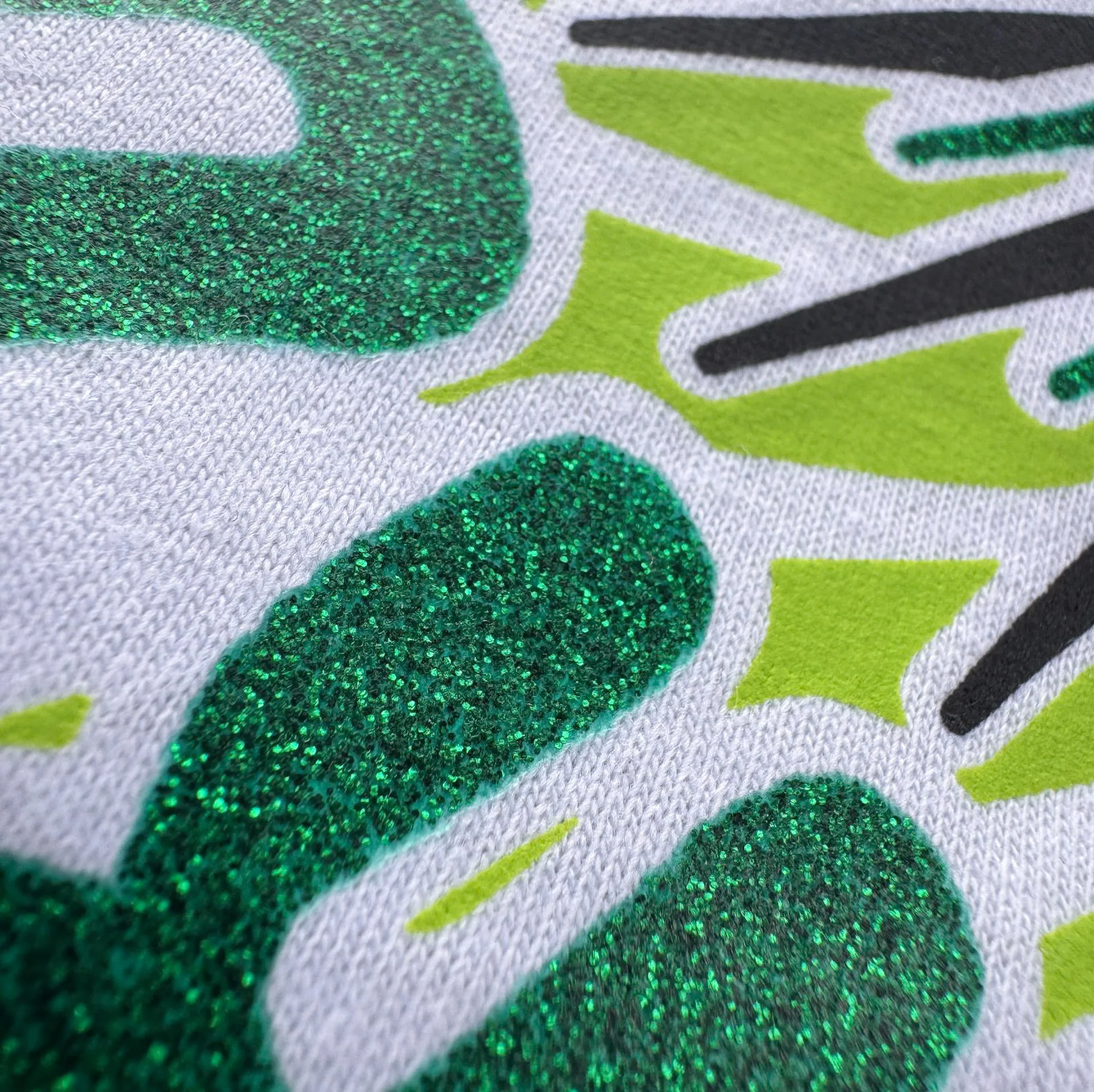
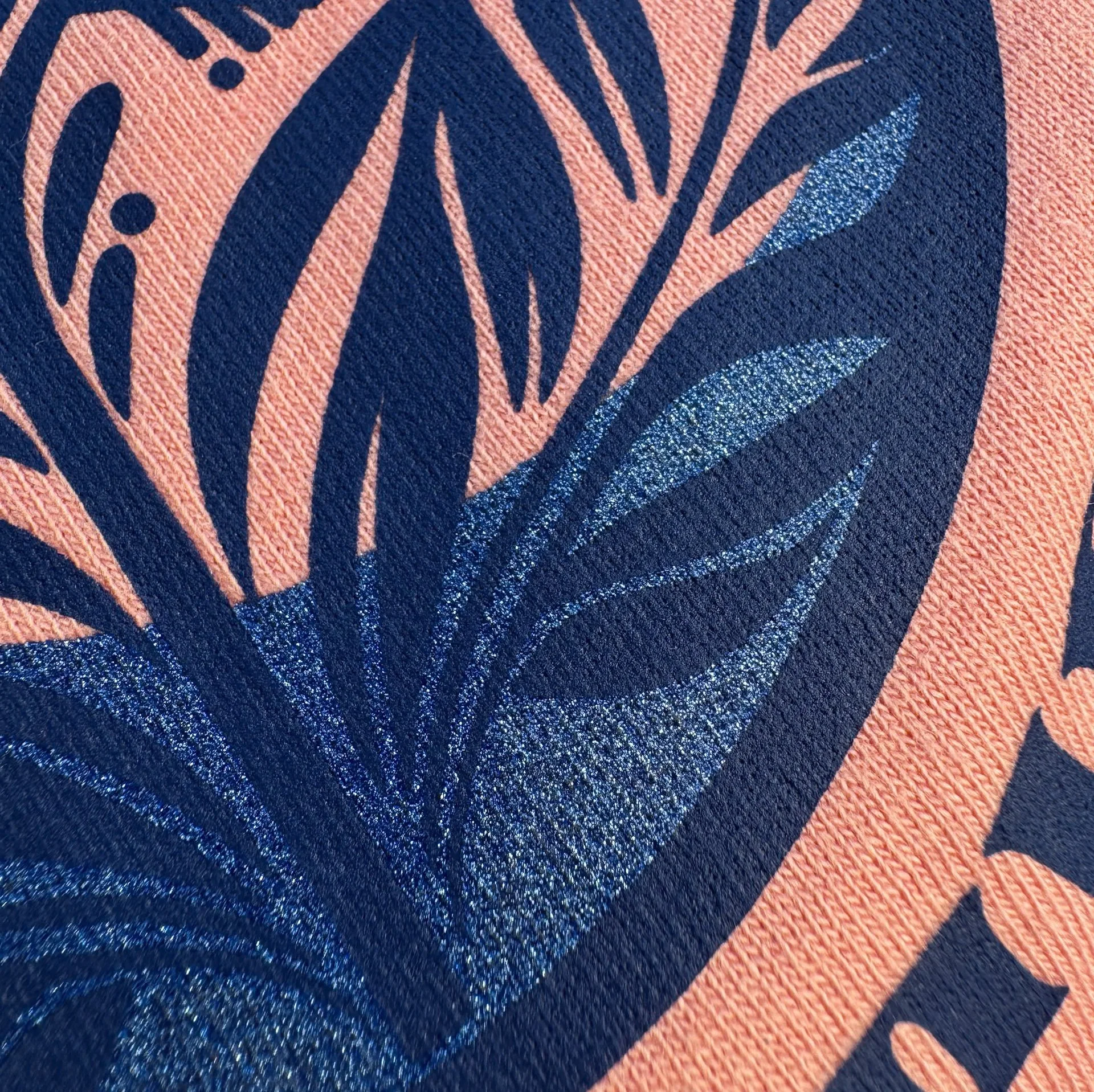
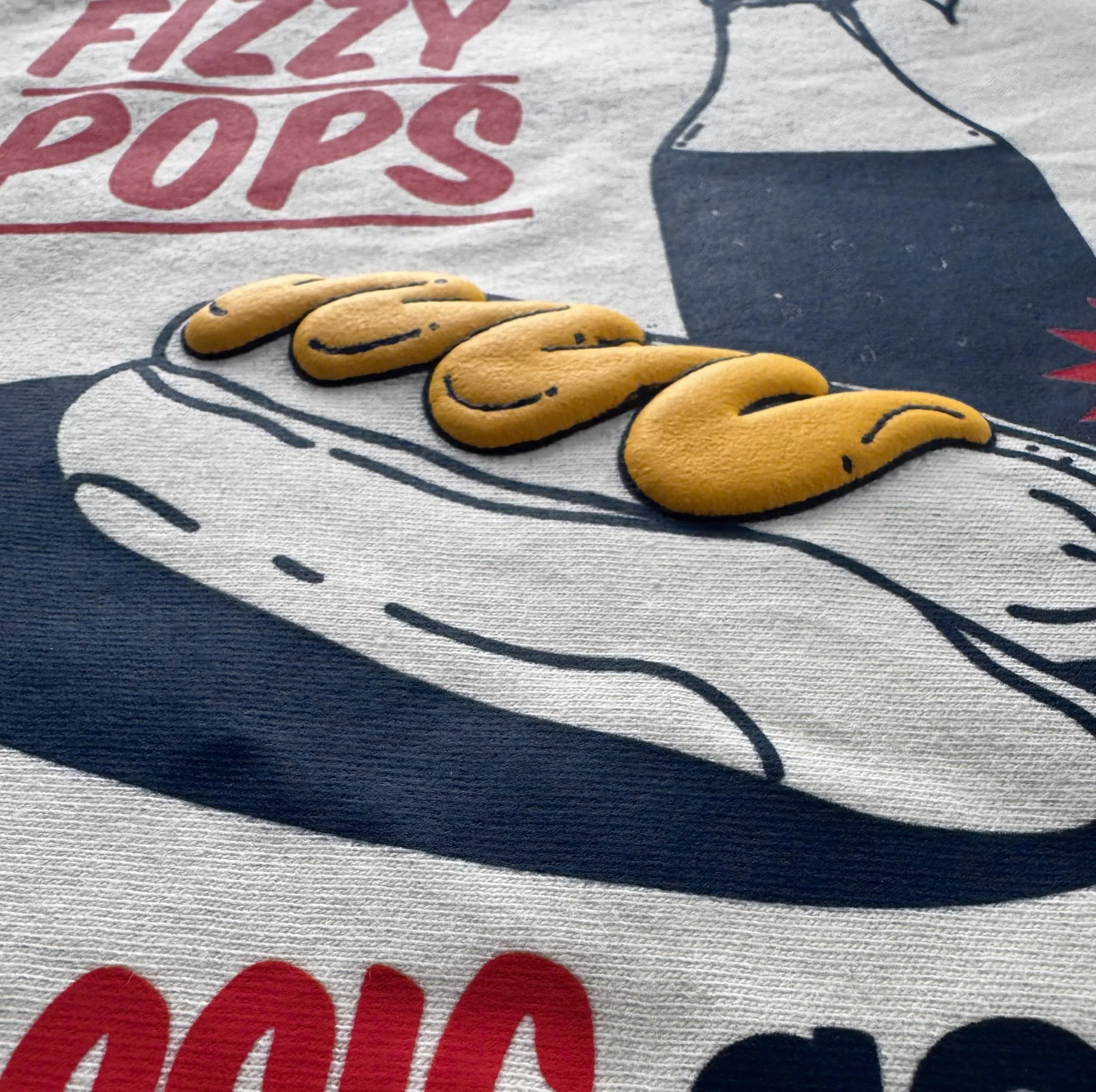
Texture, dimension, and visual depth immediately change how a print is perceived. A Puff logo feels intentional. A Shimmer accent feels elevated. Vintage Wash feels retail-ready. These qualities are easy for customers to see and feel, which makes the value instantly understandable.
That’s why specialty screen-printed transfers support premium pricing so effectively. Customers don’t need a technical explanation of ink systems or mesh counts; they just need to understand the result.
When value is obvious, price resistance drops.
The Most Common Upselling Mistake Transfer Decorators Make
The fastest way to kill a specialty finish recommendation is to frame it as a question.
“Do you want to upgrade to Puff?”
“Do you want to add Glitter?”
“Do you want to spend more?”
That language positions specialty finishes as unnecessary extras and puts the customer in decision-defense mode.
A better approach is recommendation-based guidance.
Instead of asking, lead:
“For logos like this, we usually recommend a Puff for better impact.”
“If these are being sold at retail, this finish aligns better with customer expectations.”
“This fabric performs best with this type of print.”
You’re not upselling, you’re advising.
How to Introduce Specialty Finishes Naturally in a Transfer Workflow
Timing matters.
Specialty finishes should be introduced during design and intent discussions, not after pricing is presented. This is especially true for decorators using custom transfers, where the manufacturing decision happens upstream.
Natural entry points include:
Logo size and simplicity
Garment type and fabric
Intended use (promotion vs. resale)
Audience (spiritwear, retail merch, staff apparel)
Examples that feel natural:
“Because this logo is simple, adding dimension keeps it from feeling flat once it’s pressed.”
“If this is for resale, this specialty transfer creates a more retail-level finish.”
“This garment pairs really well with texture that will elevate the final result.”
When specialty finishes are framed as part of the design solution, customers rarely push back.
Match the Finish to the Intent of the Design
Specialty finishes work best when they serve a purpose, not when they’re forced.
General guidelines for transfer decorators:
Minimal logos benefit from Puff or dimensional screen print transfers
Bold graphics stand out with Shimmer or metallic accents
Vintage or lifestyle brands pair well with Vintage Wash and other soft-hand finishes
Performance garments require stretch-friendly transfer solutions
Just as important: knowing when not to recommend a specialty finish.
Saying “this doesn’t need it” builds credibility. When customers know you’re not upselling everything, they trust your recommendations when it truly matters.
A Real-World Example: How a Specialty Finish Improves Margin
Let’s look at a simple, realistic scenario for an apparel decorator using custom screen print transfers.
The Setup
➤ 48-piece order
➤ One-color logo
➤ One print location
➤ Midweight tee or fleece
➤ Customer wants something clean, professional, and long-lasting
Option A: Standard Flat Transfer
➤ Flat screen print transfer
➤ Clean result, but visually similar to competitors
➤ Solid margin, nothing exceptional
This option works but it doesn’t differentiate the garment or the decorator.
Option B: Puff Screen Print Transfer (Recommended)
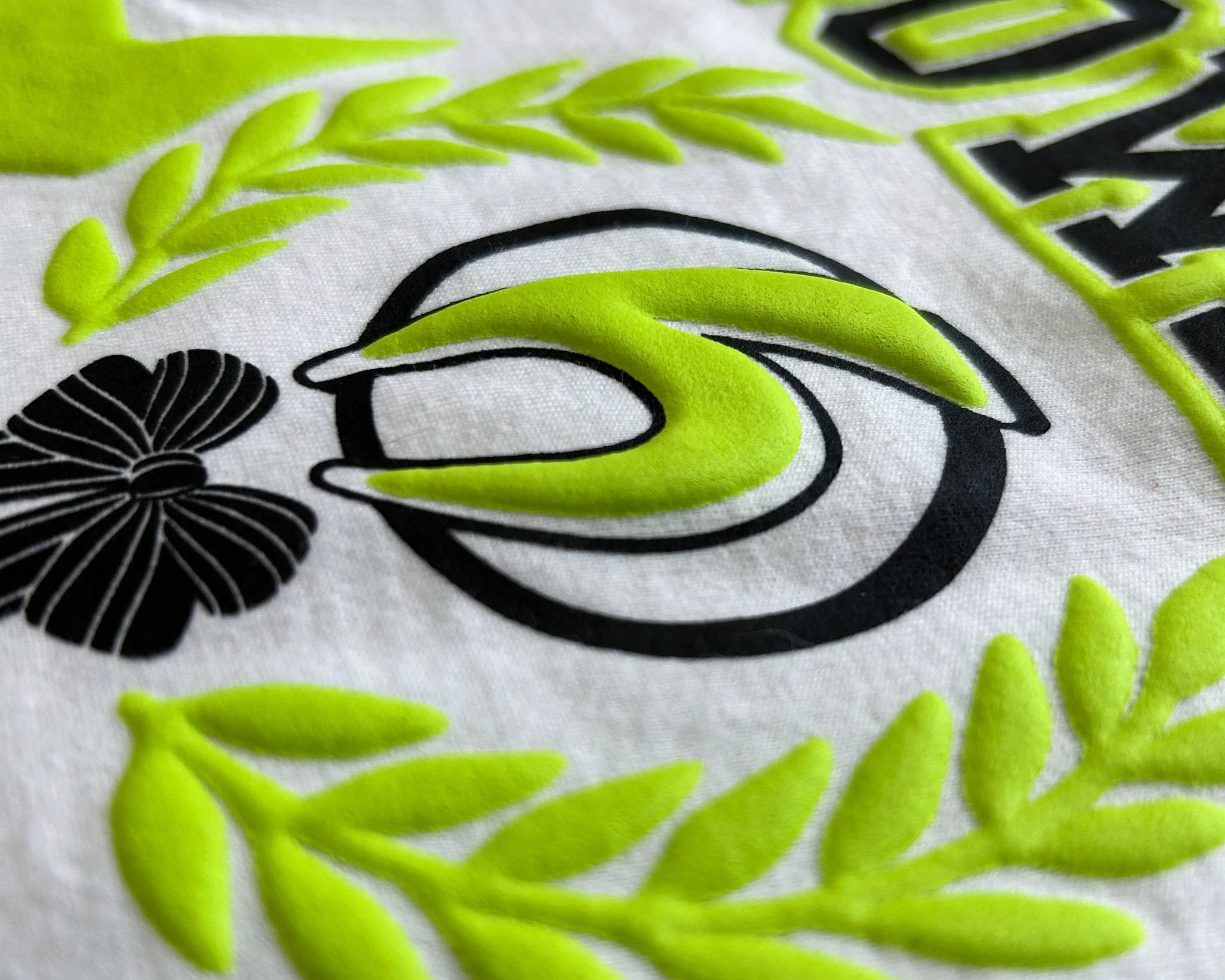
➤ Puff used intentionally to add dimension to a simple logo
➤ Slight increase in per-transfer cost
➤ Modest per-shirt price increase for the customer
Here’s the key insight:
While the customer sees a small price difference, the decorator experiences a disproportionate margin lift. The perceived value of texture far exceeds the actual cost increase of the transfer.
In many cases, decisions like this can increase per-order profit by 20–40%, without adding:
➤ Additional press time
➤ Extra print locations
➤ Complexity at application
The heat press process stays the same. The value upgrade happens before the press ever closes.
That’s one of the strategic advantages of working with custom transfers.
Let Customers See (and Feel) the Difference
Specialty finishes sell fastest when customers don’t have to imagine them.
Physical samples, transfer swatches, or pressed garment examples remove uncertainty and shorten decision time. Even simple mockups comparing flat vs. specialty finishes help customers understand what they’re paying for.
When customers clearly see the difference, pricing objections tend to disappear.
Confidence Replaces Pressure
Upselling only feels salesy when it’s driven by price instead of purpose.
For apparel decorators using custom screen print and DTF transfers, specialty finishes are a powerful intersection of design expertise and pricing strategy. When recommended confidently and intentionally, they increase order value, strengthen trust, and improve margins without complicating application.
Up next: how to structure those recommendations into pricing menus that sell for you.
Q&A: Specialty Finish Upselling for Transfer Decorators
Are specialty screen print transfers really worth the extra cost?
Yes, when used intentionally. Texture and dimension create visible value that supports higher pricing, especially on simple logos.
How do I explain specialty transfer pricing without getting technical?
Focus on outcomes: feel, durability, visual impact, and retail appearance, not production details.
What specialty finishes perform best for spiritwear?
Puff, Shimmer, and Glitter finishes tend to perform well because they photograph well and stand out from a distance.