
When More Merch Means Fewer Sales: How to Build a Smarter School Store
More products do not necessarily mean more sales.
It sounds counterintuitive, especially when offering plenty of options feels like good customer service. But past a certain point, a crowded school store can make buying harder than it needs to be.
Parents browse. Similar products begin competing with one another. The differences become harder to understand, and a purchase that should have taken a few minutes gets pushed aside for later.
The problem is not a lack of interest in supporting the school. It is a store asking shoppers to make too many decisions before they can do it.
Why More Options Backfire
Most decorators don’t fill school stores with dozens of products because they want to make shopping complicated.
If parents, students, teachers, and alumni all have different preferences, offering something for everyone can feel like the safest approach. But every additional product also gives the shopper something else to compare.
The decorator sees forty opportunities to buy.
The parent sees forty decisions to sort through.
Picture a parent opening a school store on their phone during pickup. They have three minutes and one goal: buy something, support the school, and move on.
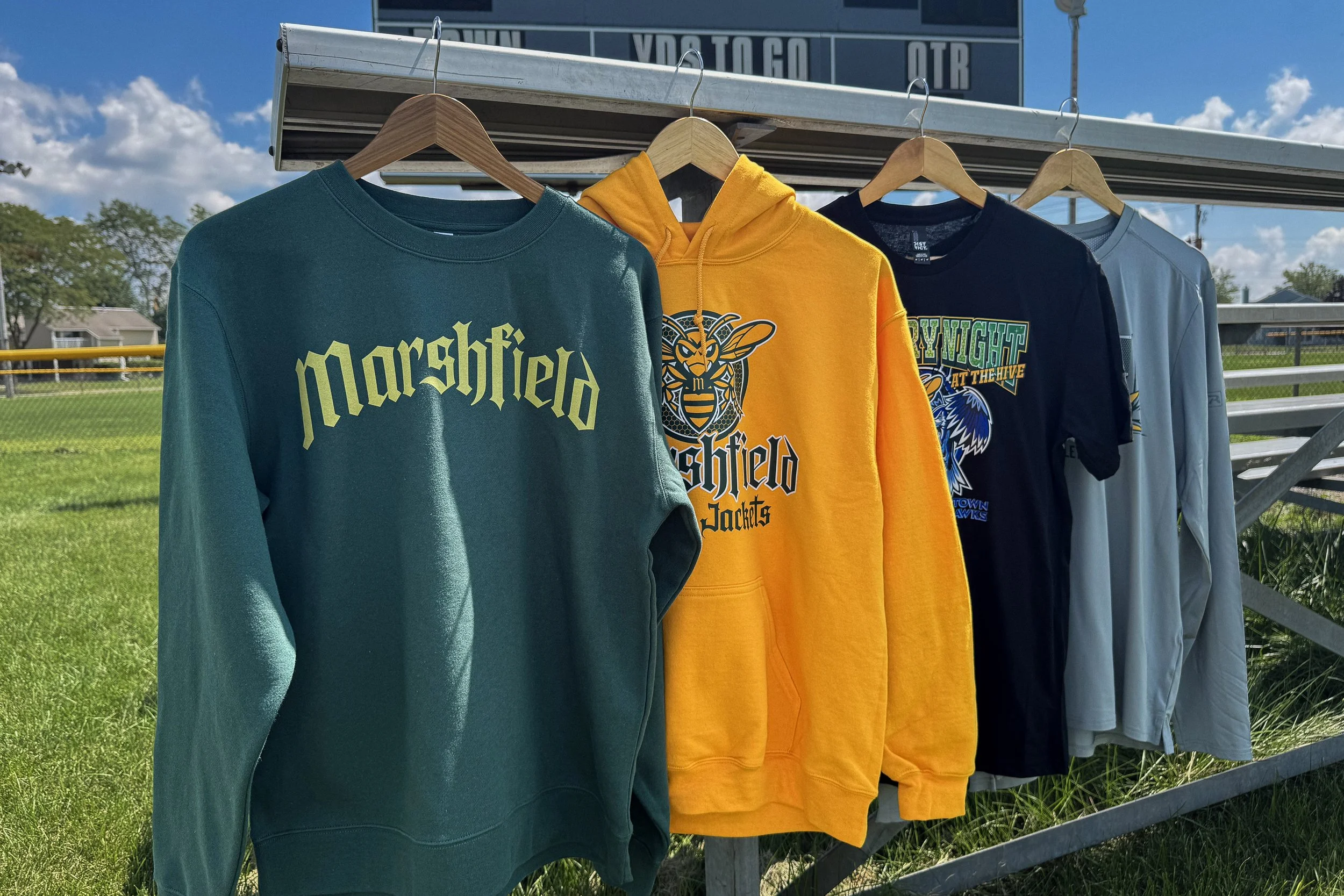
Instead, they find thirty-two products. T-shirts in four colors. Two nearly identical hoodies. A performance tee with no clear purpose. A crewneck that looks like the hoodie but costs eight dollars less. A quarter-zip they were not expecting to consider.
Now they have to become a product expert just to complete what should have been a simple purchase.
They close the tab and tell themselves they will come back later. Many will not.
More products do not necessarily create more opportunities to buy.
Sometimes they create more opportunities to hesitate.
Which Store Would You Rather Shop?
Same school. Same audience. Two very different shopping experiences.
| Store A: The Catalog | Store B: The Curated Collection |
|---|---|
| T-shirts in four colors | One strong tee in the school palette |
| Two nearly identical hoodie styles | Two hoodies with clearly different weights, fits, or price points |
| A performance tee with no explained purpose | A performance tee connected to a specific sport or use |
| A crewneck that competes with the hoodies | A crewneck with a distinct style and reason to exist |
| Products presented with equal importance | A clear core lineup with supporting options |
| The shopper must identify the differences | The differences are immediately understandable |
This behavior is often described as choice overload. When shoppers face too many similar options without enough guidance, choosing can become harder instead of easier.
The number of products alone isn’t the issue. Ten clearly differentiated products may be easier to shop than six nearly identical hoodies. The problem begins when products overlap, compete for attention, or give shoppers choices without giving them meaningful differences.
Most parents aren’t visiting a school store because they want to study apparel specifications. They want a good product that lets them support their school. The easier it is to recognize that product, the easier it is to buy.
Build the Store Around Reasons to Buy
A strong school store doesn’t need to begin with a product count. It needs to begin with clear roles. A simple three-part foundation gives the collection structure:
The Accessible Piece. This is for the supporter who wants to participate without making a large commitment. It should feel versatile, recognizable, and easy to purchase. A well-designed tee is often a natural fit.
The Everyday Piece. This is the product a student or parent would choose to wear outside a school event. It should feel like a real wardrobe addition, not an obligation. A quality hoodie or crewneck can fill this role.
The Premium Piece. This is for the supporter who wants something more distinctive or substantial. It could be a coach jacket, heavyweight hoodie, or elevated quarter-zip with enough perceived value to justify the higher price.
Three roles don’t have to mean only three products. They create the core architecture of the store. Additional products can be added when they serve a different shopper, use, fit, or price point.
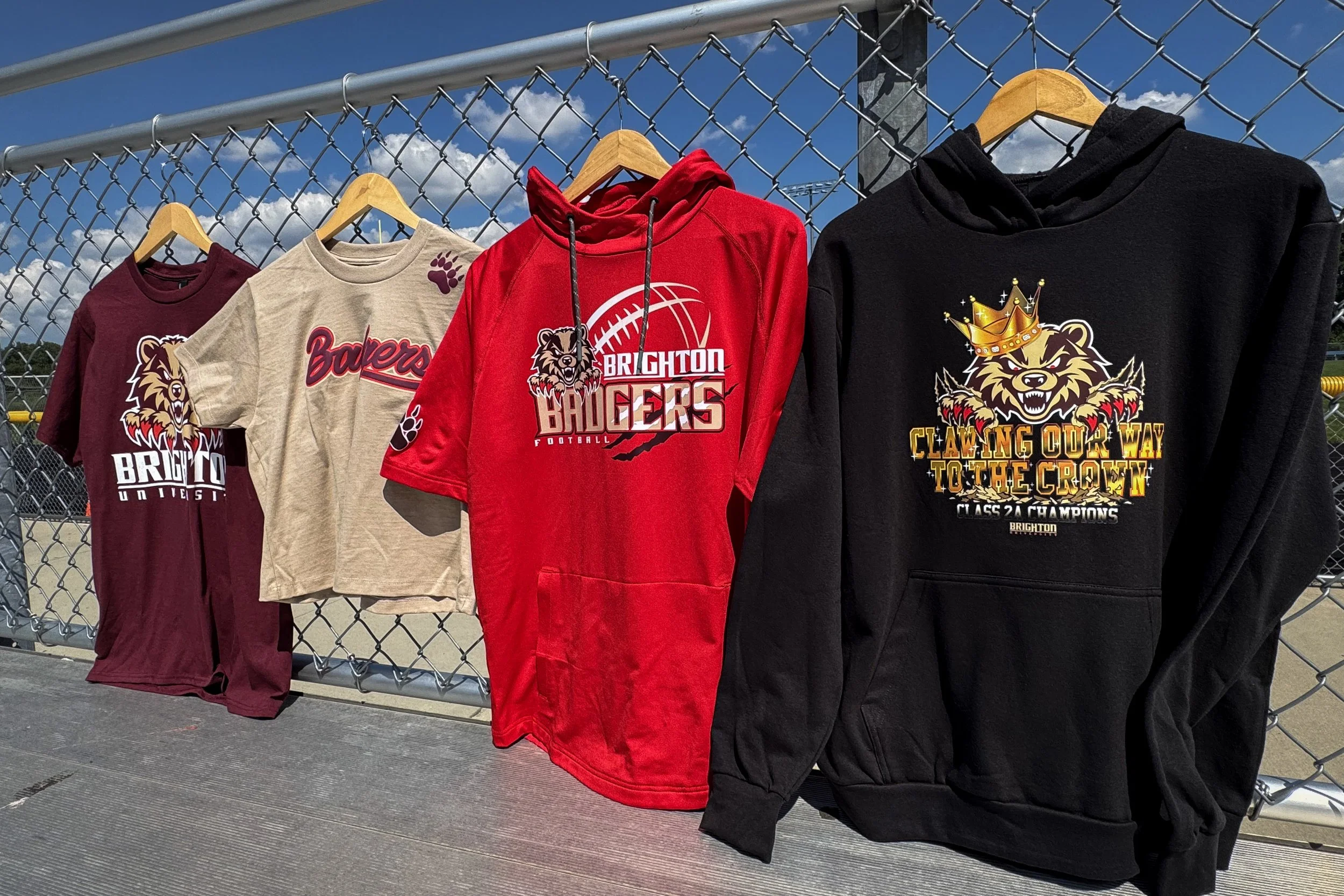
A Legacy Athletic collection offers a clean example: a heavyweight tee, a midweight hoodie, and a premium coach jacket pulled from the same three-color palette. Each piece looks connected, but no two products are competing for the same job.
One palette. One recognizable identity. Three distinct reasons to buy.
That kind of collection is easier for the school to explain, easier for supporters to understand, and easier to promote with genuine enthusiasm.
A School Does Not Need Another Catalog
A school can already find apparel catalogs. What it needs from a decorator is judgment.
The most valuable decorators don’t present thirty options and ask the school to figure out which ones might work. They arrive having already done some of the narrowing.
Based on what we know about your audience, here are the pieces I would start with. Here is who each one is for, and here is why each one belongs.
That recommendation reduces the decision burden for the school before the store even opens.
It can also change how the school approaches promotion. When administrators, coaches, or booster leaders understand the collection and believe in the product choices, they can talk about the store with more confidence.
A catalog presents choices. A recommendation creates direction.
Make Every Product Earn Its Place
Before adding another product to a school store, ask:
Does it serve a shopper the current lineup does not?
Does it offer a meaningfully different use, fit, weight, or price point?
Can the school clearly explain why someone would choose it?
Does it strengthen the collection without competing with a better product?
Would removing it leave a noticeable gap?
If the answer is no, the product may be adding another decision without adding another reason to buy.
This same filter can be applied to colorways. Another color should not be added simply because it is available. It should support the school identity, appeal to a distinct audience, or serve a clear merchandising purpose.
Variety is useful when it creates meaningful choice. It becomes noise when the differences are too small to matter.
One Question Worth Asking Before Every Store Opens
If you could only lead with a few products, which ones would make the cut?
Those products are the foundation of the store.
Everything else should support that foundation rather than compete with it. Curating the assortment isn’t about giving the school less; it’s about helping the school lead with its strongest products and giving shoppers more confidence in what they choose.
Sometimes the smartest thing you can add to a school store is less.
The Team Shop Reboot Playbook includes the tools, frameworks, and worksheets decorators need to build more intentional school stores. Access the Playbook HERE.
Frequently Asked Questions
Q: How many products should a school spirit wear store offer?
A: There is no universal number that works for every school. Start with a focused core assortment built around distinct shopper needs, uses, and price points. Add another product only when it provides a meaningful option that the existing lineup does not.
Q: What is choice overload in a school merch store?
A: Choice overload can occur when supporters face more similar options than they can easily compare. Instead of making the store feel more useful, those choices make the purchase require additional time and effort. A curated assortment helps shoppers understand what each product offers.
Q: How can decorators help schools sell more spirit wear?
A: Decorators can act as advisors rather than catalog providers. Recommend a focused assortment, explain who each product is for, and give the school a clear reason to believe in the collection. This makes both shopping and promotion more straightforward.
Q: What products work well in school spirit wear stores?
A: Products that feel like useful wardrobe additions are strong candidates. Quality tees, hoodies, crewnecks, jackets, and performance apparel can all earn a place when they fit the audience and serve distinct purposes. The best assortment depends on the school, its supporters, and how the merchandise will be worn.
Q: Should a school spirit wear store offer multiple colorways?
A: Multiple colorways can work when each one supports the school identity or appeals to a distinct audience. They become a problem when they multiply choices without adding meaningful value. Begin with a disciplined school palette, then add colors only when there is a clear merchandising reason.